


The Leadership We've Forgotten

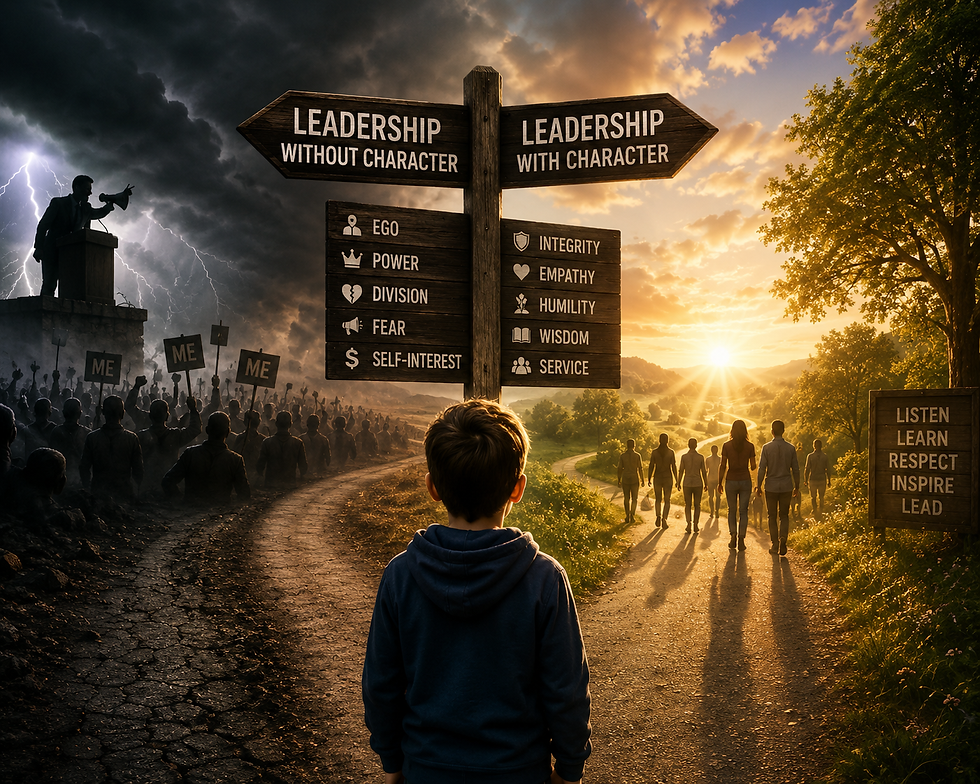
Many people today seem to define leadership as toughness without compromise. In this view, a leader is someone who never admits uncertainty, never changes course, dismisses criticism, and projects strength at any cost.
As a result, qualities such as negotiation, strategic thinking, intellectual ability, and empathy are pushed aside. Leadership is too often judged by who can shout the loudest, deliver the harshest insults, and gain the most personal advantage from a situation. True leadership looks very different. Whether guiding citizens, employees, players, or any other group, effective leaders understand the work before them, recognize individual differences, and communicate clearly with both individuals and the group as a whole.
Leaders who combine knowledge, respect, and clear communication are far more likely to earn trust, solve problems, and bring out the best in the people they lead.
Communication is one of the clearest signs of effective leadership. Leaders who speak and write with clarity, consistency, honesty, and purpose often stand apart from those who rely on volume, confusion, or personal attacks. Strong communication allows leaders to inform, persuade, and inspire others while building trust through both their words and their actions.
Communication is perhaps most visible in public speaking. Compare a speech by former President Barack Obama with a recent speech by President Donald Trump, and the contrast in clarity, tone, respect for the audience, and command of the message becomes easier to see. Then ask yourself which example you would want your child to study and learn from.
Leadership is difficult. At times, leaders must be firm, strong, and willing to stand their ground. Tough decisions require resolve. They also require intelligence, sound judgment, and the humility to rely on experts who understand the situation.
Unfortunately, many leaders in government, business, and civic life seem to have lost sight of these essential qualities. To paraphrase former President Bill Clinton, they appear to believe that people prefer someone who is strong and wrong over someone who is weak and right. But when did empathy, intelligence, sound judgment, and humility become signs of weakness? Clinton's point was that voters often mistake displays of strength for effective leadership. Strength itself is not the problem. The problem is confusing arrogance, ignorance, indifference, self-interest, and dishonesty with strength.
The same principle applies in business. Companies frequently promote lofty values and ambitious social commitments. Yet those commitments matter only when leaders are willing to sacrifice something to honor them. Leadership is revealed not by mission statements but by decisions.
We need more leaders like Patagonia founder Yvon Chouinard. He and his family gave up ownership of the company, valued at about $3 billion, so its profits could help fight climate change. They are likely still financially secure, but their decision offers a powerful example of using wealth and influence for a purpose larger than themselves.
Few business leaders will ever have the opportunity to give away a company worth billions of dollars. That is not the lesson. The lesson is that leadership is ultimately measured by what we are willing to do for something larger than ourselves. Whether leading a nation, a company, or a family, our legacy is shaped less by what we accumulate than by what we contribute.
A few weeks ago, I wrote an essay titled Where Have You Gone, Barack Obama? Our Nation Turns Its Lonely Eyes to You. Perhaps today we should ask a different question: Where have all the Yvon Chouinards gone? The business world turns its lonely eyes to you.


Comments